The Glow Behind the Chair: Lighting a Cane Conservatory After Dark
A conservatory is a wonderful room in daylight and a slightly awkward one after dark. The glass goes black, the cane furniture turns into silhouettes, and the one ceiling light becomes the main event. Switch it on and everything is suddenly very visible and very flat. Switch it off and you’re navigating by the light of the television. Neither is the evening you had in mind.
The good news is that cane is one of the most forgiving materials to light. Its open weave is made for shadow. The trick is to stop treating the conservatory like a kitchen and start treating it like a sitting room that happens to have a lot of glass in it.
Why one overhead light flattens cane
Cane furniture has texture: woven panels, slim frames, airy gaps. A single pendant or spotlight directly above sends light straight down and strips out that texture. Shadows disappear, the weave reads as a solid block, and the room loses its depth. It also puts the brightest point at ceiling level, which is the opposite of what you want when you’re slumped in a chair with a cup of tea.
Think of the room in layers instead. You want a gentle wash of ambient light, a pool of light where someone is reading or knitting, and a few small points of glow at low level. That mix gives cane the chance to do its thing: filtering light, throwing soft patterns, and making the conservatory feel cosier than its glass walls suggest.
Start low, then work upwards
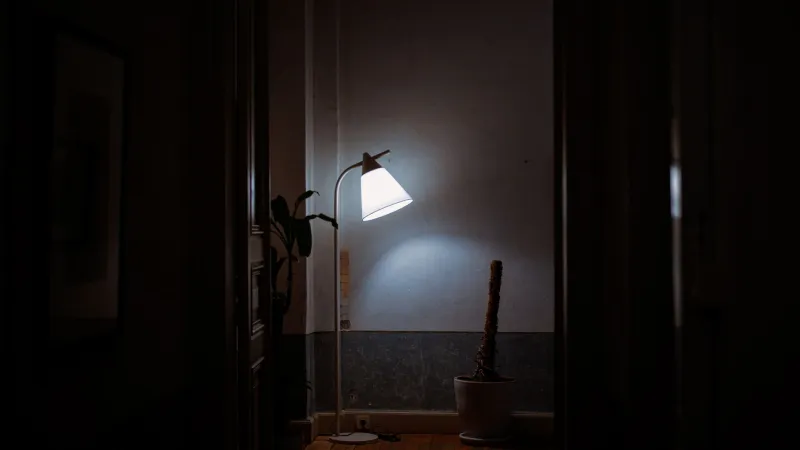
The first move is usually a floor lamp in a corner or behind a chair. A slim lamp with a linen or paper shade placed behind a reading chair does two jobs: it lights the page without shining in anyone’s eyes, and it backlights the cane so the weave shows up in relief. If the lamp is too tall or too bright, it becomes a second ceiling light. Aim for something you can dim, or use a lower-wattage bulb and let it settle into the background.
Next, look at the walls. Conservatories don’t always have much wall space, but where there is a pier between windows, a small wall light can wash light upwards and downwards. It’s a useful way to break up the black mirror effect of dark glazing. Choose a fitting with a shade that directs light onto the wall rather than out into the room, and keep it on a separate switch if you can.
Finally, add the low-level glow. This is where battery candles, a small table lamp on a side table, or a rechargeable portable lamp come in. They don’t need to be bright. They need to be warm and low, so the eye reads them as cosy rather than practical. A battery candle on a side table next to a cane armchair is a small thing that changes the whole mood.
Bulb warmth for British winter evenings
British winter light is already cool and grey, so the last thing a conservatory needs after dark is a bulb that mimics a dentist’s waiting room. Look for warm white bulbs around 2700K. Anything much higher starts to feel clinical, especially against pale cane and cool-toned fabrics. If you have a dimmer, use it. If you don’t, choose lower-output bulbs and more of them rather than one blistering fixture.
LEDs are the sensible choice now: they run cooler, which matters near glazing and curtains, and they last. Just check the label for dimmability if you’re putting them on a dimmer circuit. A warm, dimmable LED in a floor lamp is worth more than a fancy fixture with the wrong bulb in it.
Cables, glazing and the practical bits
This is the less glamorous part, but it matters. Conservatories often have limited sockets, and the temptation is to run an extension lead across the floor to reach a lamp in the corner. Don’t. Route cables along skirting boards, under rugs where they won’t be walked on, or use a slim cable cover. Keep them away from door thresholds and anywhere someone might trip while carrying a tray.
Be careful around glazing, too. Keep lamps and cables clear of curtains and blinds, and don’t trap flex against hot surfaces. If you’re using a lamp near a door to the garden, make sure the cable isn’t going to get caught when the door opens. For anything fixed, use a qualified electrician and make sure the circuit is protected. Battery-powered candles and rechargeable lamps avoid the issue altogether, which is one reason they’re so useful in a conservatory.
Two small moves that change everything
First, try a floor lamp behind your favourite reading chair. Not beside it, not in front of it — behind it, angled slightly towards the chair. The cane back will catch the light and cast a soft shadow onto the wall or floor, and you’ll get enough light on the page without glare. If the lamp has a shade, make sure the bottom edge sits around eye level when you’re seated.
Second, put a battery candle on a side table. It sounds almost too simple, but a small flicker at low level draws the eye away from the dark glass and gives the room a centre of gravity. Group it with a book, a small plant or a mug and it reads as deliberate styling rather than a emergency lighting solution.
A simple evening setup
If you’re starting from scratch, try this: one dimmable floor lamp in the darkest corner, one small table lamp or battery candle beside the main seating, and the overhead light on a dimmer — or off entirely. Add a wall light if you have a suitable pier, and keep the bulbs warm. That’s usually enough to make a cane conservatory feel like a room you want to sit in after sunset, rather than a glass box you pass through on the way to the kitchen.
The big light isn’t evil. It’s just not the whole story. Cane furniture looks best when light is allowed to graze it, filter through it and fall away into shadow. Layer your lighting and the conservatory will do the rest.