Soft Seat, Serious Work: Setting Up a Conservatory Office Around Cane
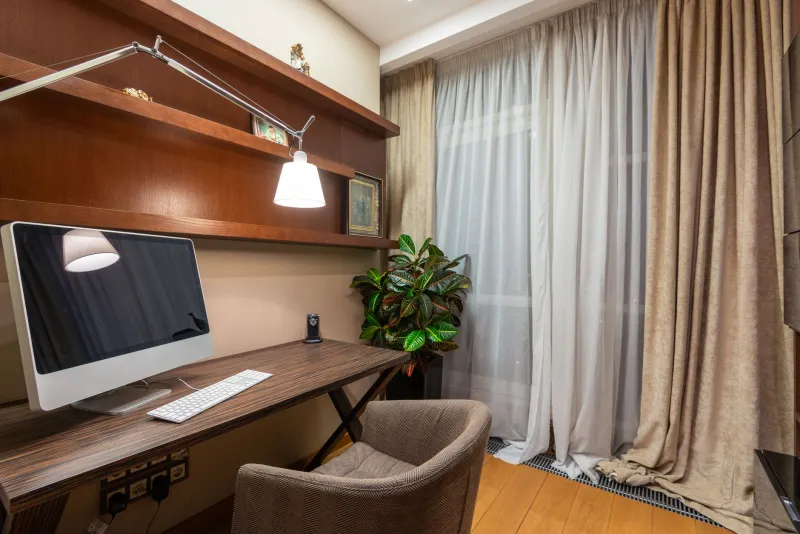
A conservatory is often the brightest room in the house, which is why it quietly becomes the default office. The trouble is that cane furniture is built for lounging, not for eight hours of spreadsheets. The good news is that you do not need to swap your cane chair for a grey mesh task seat. With a little thought, it can become a genuinely credible place to work — and still look like somewhere you would want to sit with a cup of tea on a Sunday.
Start with the seat, not the desk
A cane chair’s charm is its airy frame, but that same frame gives very little in the way of padding. Before you worry about monitor height or cable tidies, sort out what you are actually sitting on. A firm, tie-on seat pad is the minimum; a wedge cushion or a shallow memory-foam pad will do more for a full working day than a decorative squab. Look for something about 5cm thick, with ties so it stays put when you push back from the desk.
Posture matters more than plumpness. Add a small lumbar roll or a folded throw at the base of your back, and check that your hips are roughly level with your knees. If the cane seat is low and the desk is standard height, a footrest will stop you perching. As a rough guide, a typical desk is 72–75cm high, so you want your seat around 45–48cm from the floor once the cushion is in place. If the chair is much lower, a cushion will help, but do not pile on three of them — you will end up sliding forward and hunching over the keyboard.
Put the desk where the room behaves
Conservatories are wonderful for light and terrible for glare. Facing the garden sounds lovely until the low winter sun bounces off your screen at 10am. Try to sit side-on to the main glazing rather than directly facing it, and keep the desk clear of the busiest walking route between the kitchen and the patio doors. A voile blind or a simple roller shade is worth the investment; it softens the room without turning it into a cave.
Draughts are the other British conservatory speciality. A cane chair placed right beside a glazed door or a floor vent will feel chilly by mid-afternoon, even with the heating on. Move the desk a metre or so inboard, add a draught excluder at the door, and keep a light throw over the back of the chair for the days when the temperature drops faster than the forecast promised. If the room has a radiator, do not block it with a filing cabinet; let the heat move around the space.
Give the working kit somewhere to hide
A conservatory office only works if the office part can vanish. Cane is forgiving here because woven baskets and lidded trunks look as though they belong. Use a deep lidded basket beside the desk for paperwork, a smaller lidded box for chargers and pens, and a wall shelf or two for the things you need weekly rather than daily. The aim is a desk surface that can be cleared in under a minute.
Cables are the least romantic part of any home office, so deal with them properly. A simple cable box or a lidded wicker basket with a notch cut in the back will swallow a power strip and the tangle of laptop leads. Stick a label on each charger with a marker pen — it sounds fussy, but it saves ten minutes of rummaging every time you need the printer cable. If you can, run a single extension lead to the desk rather than three separate cables snaking across the floor. And keep paperwork in a vertical file or a shallow basket, not in a hopeful pile that slowly spreads across the cane table.
Make the chair a chair again at five
The real test of a conservatory office is what happens at the end of the day. If the laptop stays open and the papers stay out, the room never switches back to being social. Build a small closing ritual: laptop into a drawer or basket, cushion straightened, notebook stacked, mug taken through to the kitchen. It takes two minutes and changes the whole mood of the room.
A tray is a useful ally here. Keep one on the desk or beside it, and use it to gather the working clutter before you move it out. At five o’clock, the desk can become a drinks station or a place for a board game; the cane chair, with its cushion plumped up, reads as somewhere to sit and chat rather than a workstation. If you have space, a floor lamp with a warm bulb will make the room feel deliberately relaxed once the daylight goes.
The point is not to pretend the conservatory is a corporate office. It is to give the cane chair enough support, the desk enough shelter, and the clutter enough hiding places that a full working day feels comfortable. Done well, nobody will guess that the room has been doubling as a study since breakfast.
A final check before Monday
Sit at the desk for twenty minutes with your usual working setup. Are your feet flat? Is the screen roughly at eye level? Can you reach the kettle without moving a stack of papers? If the answer to all three is yes, you have a conservatory office that works with the cane, not against it. If not, start with the cushion and the desk position — those two fixes solve most of the problem. The rest is just baskets, a blind, and a firm intention to close the laptop at five.