Carry, Don’t Drag: A Calm Moving Day Plan for Conservatory Cane
Moving day has a way of turning sensible people into optimists. Normally careful homeowners suddenly believe a cane sofa will be fine if they just take it slowly on the stairs. It won’t. Cane furniture is lighter than oak, but it is also less forgiving: the frame has joints, the woven panels have give, and the arms are not handles. The good news is that a conservatory full of cane can be moved without drama if you plan for the awkward bits before the van arrives.
This is not a macho lifting guide. It is a calm, room-by-room approach for a British house move in 2026 — the kind where the hallway is narrow, the weather is doing three seasons in one afternoon, and the removal team is already asking where the kettle is.
First, make the cane furniture boring to move
Before anything gets wrapped, empty the conservatory properly. Take off cushions, throws, glass tops, trays and anything that could slide. Put screws, bolts and little feet into a labelled sandwich bag and tape it to the underside of the piece it belongs to. If a leg comes off, you want to know that within seconds, not on the third evening in the new house.
Take a few photographs of each item from the front and from underneath. Cane frames can have subtle braces and corner blocks, and a photo is faster than memory when you are reassembling a chair in a room full of boxes. If you are using a removal company, walk them round and point out the cane pieces specifically. Ask them not to lift by the arms, the back rail or the woven seat. Most crews are excellent; they just need to know which items are the delicate ones.
Wrap for rubbing, not for show
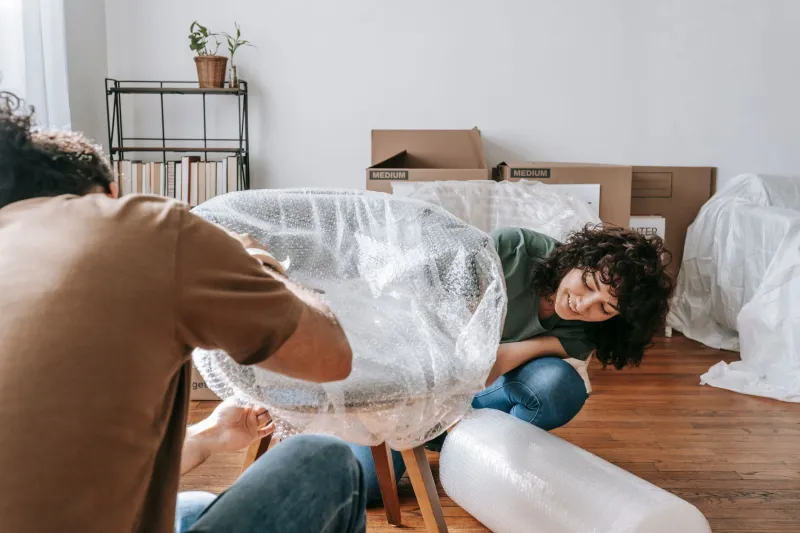
Cane does not need to be mummified. It needs protection from knocks, scuffs and damp. Old blankets, cardboard sheets and a modest amount of bubble wrap are usually enough. Pay attention to corners, arm ends and the tops of legs, because those are the parts that meet doorframes and van walls.
Avoid sealing cane tightly in plastic for days on end. Woven furniture needs to breathe, and a cosy plastic bag can trap moisture if the piece is moved from a cold van into a warm house. For the journey, a breathable sheet or blanket with a plastic cover over the top is a better compromise. If the forecast is properly wet, wrap the cover around the piece rather than around the cane itself, and dry everything off once it is indoors.
Lifting: find the frame, not the weave
This is the rule that saves most furniture: lift from the frame. For a chair, that means the underside of the seat frame or the legs — not the arms, not the back, and certainly not the woven panel. For a sofa, use two people, one at each end, hands under the main frame. If the sofa is longer than the doorway is wide, turn it on its side and carry it through that way rather than forcing it flat.
Do not drag cane across floors, even if it seems quicker. A blanket underneath can act as a makeshift sled on hard floors, but stairs are a two-person job with clear communication. Keep the piece low, take it one step at a time, and never let one person take the weight while the other ‘guides’. If a piece feels too awkward, stop. A five-minute rethink is cheaper than a snapped joint.
The van: brace, do not stack
Cane furniture is light, which makes it tempting to pile things on top. Resist. Woven seats and backs can crack under point pressure, and a heavy box resting on a cane arm is a repair waiting to happen. Load cane pieces so they are supported by their frames, with padding between them. Stand chairs upright if there is room, or lay them on their backs with blankets underneath and nothing heavy on the woven areas.
Use ratchet straps over padding, never directly over cane. Check that the straps are holding the frame, not squeezing the weave. If you are moving in stages, keep cane out of a damp garage or shed. A cold, humid week in storage is harder on woven furniture than a careful hour in the van.
Rain, hallways and the last ten metres
The last ten metres of a move are often the most chaotic. Protect the new hallway with old sheets or cardboard, especially if the floors have just been cleaned. Have a dry towel ready by the door for wet covers and hands. If it is raining, dry the wrapping before you bring the piece into a warm room, and do not put damp cane next to a radiator to ‘hurry it along’. Gentle air circulation is kinder.
Settling into the new conservatory
Once the furniture is in the right room, resist the urge to unwrap everything immediately. Let the pieces acclimatise for a day in a dry, well-ventilated space. Then check the joints, tighten any bolts that have worked loose in transit, and give the frames a gentle wipe. Position cane away from direct heat and avoid pushing it tight against a damp or newly plastered wall. In a new conservatory, blinds or sheer curtains will keep strong sun off the weave while everything settles.
Finally, live in the room for a week before deciding on the layout. A cane chair that looked perfect on the floor plan may prefer the other corner once the afternoon light arrives. Move it by lifting, not dragging — even on the last ten centimetres. That small habit is what keeps cane furniture out of the skip and in the family for another house move yet.