Paws Before Polish: Living With Pets and Cane in a British Conservatory
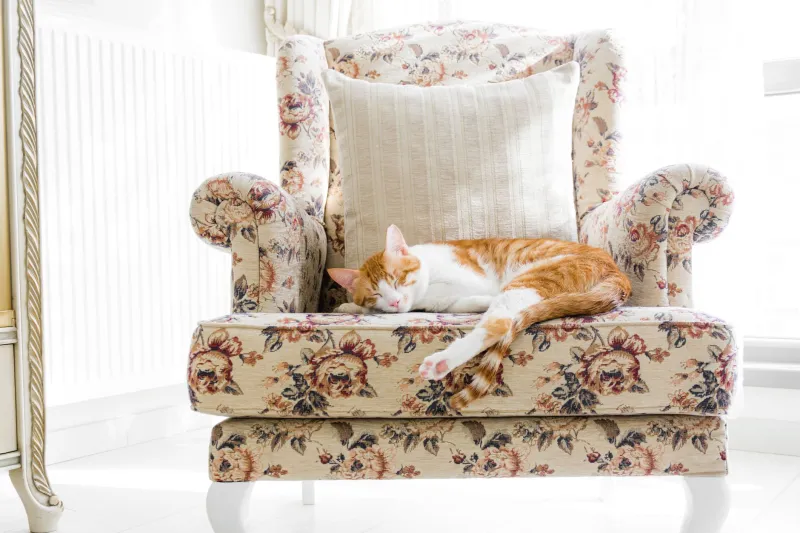
A conservatory with cane furniture and a dog tends to reveal the truth about a household very quickly. Not because cane is precious, but because cane is honest: it shows the muddy paw that landed on the seat, the claw that caught the weave, the damp cushion that stayed damp for a day too long. The good news is that none of this means choosing between pets and comfortable furniture. It means planning for the mud before it arrives, rather than pretending the back door is a clean-air lock.
Start with the route, not the furniture
Most pet damage in a conservatory begins at the door. A wet November walk ends with four paws, a wagging tail and a human carrying a lead, a bag and perhaps a half-eaten tennis ball. In that scrum, the nearest chair becomes the drying rack. If that chair is cane, the weave gets the worst of it.
So the first defence is a landing zone. Not a full boot room, necessarily, but a defined strip by the conservatory door: a washable runner, a lidded tin of old towels, a shallow tray for wet shoes and a simple hook for leads. If there is space, keep a microfibre mat outside and another inside. The aim is to interrupt the muddy journey before it reaches the seating. A dog that has been taught to pause on a mat for a paw wipe will still have an off day, but a routine helps more than a lecture.
For cats, the issue is less about wet paws and more about routes. A cat that uses the conservatory as a shortcut to the garden will treat every chair as a stepping stone. Observe the path they take and move the most delicate cane piece out of the through-line. You are not pet-proofing a museum; you are arranging a room so that the natural traffic misses the things that snag.
Where cane actually suffers
Cane and rattan are tougher than they look, but they have three weak points in a pet household. The first is the weave itself, especially on seats where claws push off during a jump. The second is moisture: cane does not mind normal indoor humidity, but it dislikes being soaked and left wet. The third is the lower edge — legs, stretchers and skirting-level panels — which is exactly where a bored dog or a determined cat may chew, scratch or rub.
That does not mean wrapping everything in plastic. It means being realistic about which pieces sit in the splash zone. A favourite armchair beside the garden door is lovely in July and a liability in January. Shift the layout so the best cane sofa sits a little further into the room, with a washable mat or a low basket between it and the door. Keep the pieces nearest the entrance to hard-wearing materials, a wipe-clean bench or a simple wooden stool. The cane can still be the star; it just does not need to be the doormat.
Covers that earn their keep
Loose covers are the simplest kindness you can offer a cane chair in a pet household. They do not need to be fitted or expensive. A washable throw over the seat, tucked in at the back, catches hair, muddy paw prints and the occasional unfortunate incident. Choose something you can machine wash at 30°C and replace without mourning it. Cotton, linen blends and tight-weave throws work well; avoid anything with long tassels or loose loops that invite claws.
For cushions, look for removable covers and keep a spare set. In a conservatory, the bigger risk is often damp rather than dirt. A wet dog lying on a cushion can leave moisture trapped against the cane seat. If the cushion cover is washable and the filling dries quickly, you can deal with it before it becomes a smell. If a cushion does get wet, take it off the cane, dry the cane surface with a cloth and let both dry separately. Do not put a damp cushion back on a cane seat and hope for the best.
A word about scratching and chewing
Cats scratch. Dogs chew. Cane is not immune to either, but the answer is management rather than punishment. If a cat is using the corner of a cane chair as a scratching post, put a proper post right beside it — same height, same texture, same tempting position. If a dog is nibbling a cane leg, check whether the leg is near a favourite resting spot or a doorway. A bitter deterrent spray can help on some surfaces, but test a hidden patch first, and never rely on it as the only fix. More exercise, a chew toy in the right place and a physical barrier while you are out will do more than a spray alone.
For older cane, a little maintenance goes a long way. Check for loose wraps or splinters and deal with them before a paw catches one. A light rub with fine sandpaper on a rough spot, followed by a suitable cane wax or polish, is usually enough. Avoid soaking the cane or sloshing water into the joints.
Cleaning routines that suit cane and rattan
Little and often beats a deep clean every six months. Vacuum cane with a soft brush attachment once a week, or more often if you have a moulting dog. Use the crevice tool gently along the weave where hair collects. For muddy marks, wipe with a barely damp cloth and a little mild washing-up liquid, then wipe again with clean water and dry immediately. Do not leave cane wet. Do not scrub hard against the grain of the weave. And do not put cushions back until everything is properly dry.
A conservatory can get warm quickly, even in a British spring. Damp cushions and warm glass are not a good combination. On wet days, hang soggy throws over the back of a wooden chair or a radiator rather than draping them over cane. If you notice a musty smell, take the cushion covers off, air the filling and wipe the cane beneath. Catching it early is much easier than rescuing it later.
The honest bit
Pets will occasionally test the plan. A muddy paw will land where it should not. A claw will catch a strand of cane. A dog will decide that the corner of a footstool is a chew toy. The point is not to create a perfect room that no animal may enter. It is to make the room resilient enough that a small accident does not become a large problem.
Keep the good cane pieces slightly away from the busiest door, put washable layers where paws land, dry wet cushions promptly and deal with snags before they spread. Then let the dog stretch out in the patch of light and the cat take the warmest chair. A conservatory is for living in, and a little mud is part of the deal.