The Glass Box in July: A Cane-Saving Routine for Hot Conservatories
A conservatory in July is one of the nicest rooms in the house and, at the same time, a slightly cruel one. All that glass is glorious for light, but it concentrates heat and UV in a way that ordinary living rooms never have to deal with. Cane and rattan are tough, sensible materials, but they are still natural. Leave them parked against a south-facing window through a heatwave and they will quietly tell you about it later.
The good news is that sun damage is mostly a slow story. A bit of planning before the hot spell, plus a few habits through it, will keep your furniture looking settled rather than sunburnt.
Why cane suffers behind glass
Cane doesn’t melt or warp like some plastics, and it isn’t as fussy as solid timber. But it does have two weak points: its finish and its moisture balance. UV light gradually breaks down lacquers, oils and painted surfaces, which is why a chair can go from warm honey to pale straw in a couple of seasons. Heat, meanwhile, pulls moisture out of the weave. Dry cane becomes brittle, bindings loosen, and hairline splits appear at the points where the material bends.
It is rarely one scorching afternoon that causes the problem. It is the accumulation: long, bright mornings, blinds left up, a chair sitting in the same hot spot from May to September. British summers are unpredictable, but that almost makes it worse. A dull June followed by a sudden 35°C week can catch both you and the furniture off guard.
Move the furniture away from the glass
The simplest fix is distance. Try to keep cane chairs and tables at least a hand’s width or more from the glass, and further still from any south- or west-facing pane that catches the afternoon sun. A centimetre or two is not really enough. The air right next to glass can be much hotter than the rest of the room, and that is where fading and drying happen fastest.
If your conservatory is tight, you don’t have to rebuild the layout. Pull the main seating group in towards the centre and leave the window ledge clear. Put a small side table or a plant where a chair used to bake. If a piece has to stay near the window, make that the one you rotate and inspect most often rather than the one you forget about.
Also think about the sun’s arc rather than just the room’s shape. A chair that is fine at breakfast may be in full sun by four o’clock. Walk the room at different times of day before you decide what lives where.
Shade the room, not just the chair
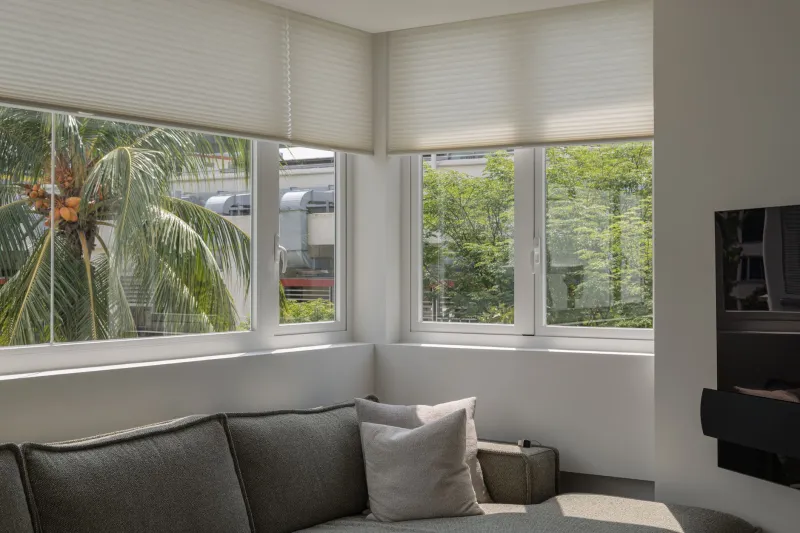
A throw draped over a chair is not really shading. It traps heat and can make the weave sweat. Proper shading works at the window. External shade is best: an awning, a shade sail, a pergola or even a deciduous tree outside does more than anything inside. If that isn’t possible, choose internal blinds or curtains with a UV-reducing lining, and close them before the room heats up rather than after.
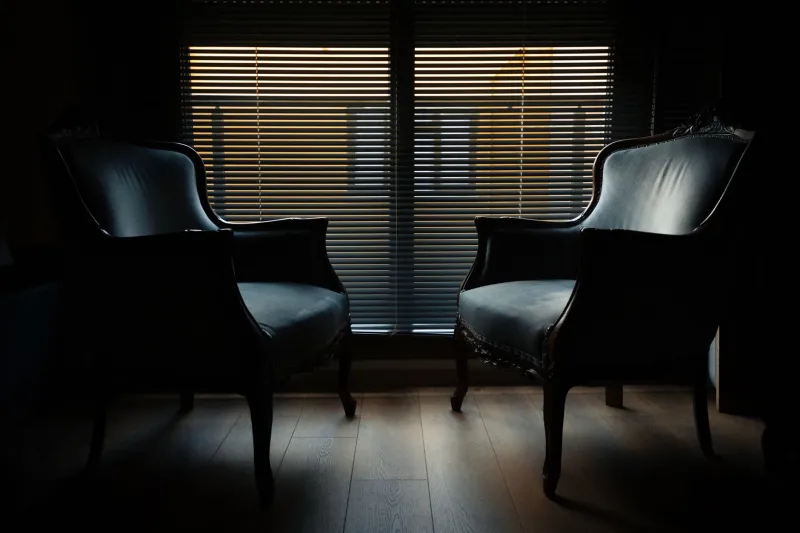
Sheer curtains are useful because they cut the glare without turning the conservatory into a cave. Window film is another sensible option for a glass roof or a fixed pane that you can’t screen. Avoid plastic dust sheets or non-breathable covers over cane for long periods; they can trap condensation and create a different problem entirely.
A simple routine helps: close the blinds on the hottest side when you leave for work, open the vents and windows in the early morning and late evening, and let the room cool overnight. Cane likes moving air. It does not like being sealed in a hot box with no ventilation.
Make rotation a habit, not a project
Furniture in a conservatory should be moved more often than furniture elsewhere. Once a month through summer, rotate chairs a quarter turn or swap them with pieces from a shadier spot. Turn cushions over and swap their positions. If you have a fixed bench or a heavy sofa, rotate the cushions and use washable covers rather than trying to drag the frame about.
Mark it on the calendar if that is what it takes. A five-minute rotation on the first Sunday of the month is far easier than a repair later. After a particularly hot week, do a quick walk-round: run your hand over the arms and backs, look along the top rails, and check the joints where the cane meets the frame.
Clean gently and don’t overdo the oil
Before the hot weather arrives, give cane a gentle clean with a damp cloth and a little mild soap, then let it dry thoroughly away from direct sun. Don’t soak it. Cane dislikes sitting wet, and a soggy weave is more likely to soften and distort. A soft brush is useful for dust in the crevices.
If your furniture has an oiled or waxed finish, follow the maker’s advice rather than reaching for any old polish. More oil is not automatically better; too much can attract dust and leave a sticky surface. Painted cane may only need a touch-up on worn edges. If the weave looks dry and chalky, ask a specialist about a suitable conditioner rather than experimenting with household products.
Spot the early signs before they become repairs
Sun damage rarely announces itself. Look for a finish that has gone chalky or patchy, colour that has lifted in a stripe where the sun falls, and cane that feels drier or more brittle than the rest of the piece. Hairline splits often start near bindings, curved arms and the tops of legs. Loose strands, a slight creak when you sit down, or cushions that seem flatter on one side are all worth noting.
Take a photo of anything that worries you and compare it after a month. Early fixes are usually small: a touch-up, a tighten, a change of position. Left alone, a dry chair in a hot conservatory can turn a cosmetic issue into a proper repair.
A simple summer routine
Weekly, glance at the forecast and close the blinds on the hottest side before the room warms up. Monthly, rotate the furniture, turn the cushions and give the cane a quick wipe and dry. After a heatwave, inspect the pieces nearest the glass first. If you go away, leave the blinds partly closed and the vents open rather than locking everything down.
Cane furniture is meant to be lived with, not preserved under glass. A little shade, a little distance from the window and a bit of rotation will keep it comfortable through the brightest weeks, so the conservatory stays the room you actually want to sit in.