Echoes in the Glasshouse: Softening a Cane Conservatory Without Smothering It
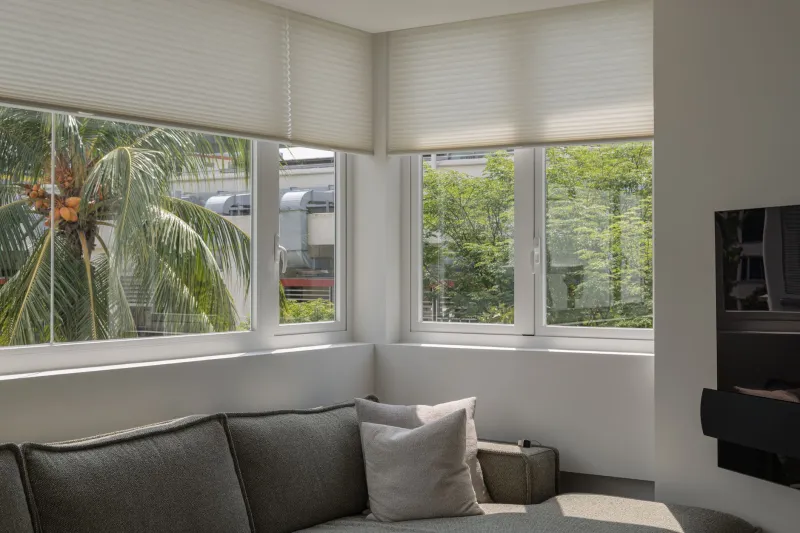
A conservatory can be the calmest-looking room in the house and still sound busy. You sit down with a cup of tea, the rain starts on the roof, someone puts a mug down on a side table, and suddenly the whole room seems to be having a conversation with itself. That is echo at work. It is not a fault in the furniture or a sign that the room is badly decorated. It is simply what happens when a lot of hard, reflective surfaces share a small space.
Cane furniture often gets blamed for this, but it is rarely the main culprit. Glass, tile, laminate, bare walls and hard window blinds do most of the reflecting. Cane is somewhere in the middle: the frames are firm, but the woven panels break up sound rather than bouncing it back like a mirror. The trick is to give the room a few soft places to land. Not many. Just enough.
Why a glass room sounds louder than it looks
A conservatory is, acoustically speaking, a glass box. Sound waves hit the windows, the roof, the floor and the walls, then ricochet around until they fade. In a furnished living room, curtains, carpets, sofas and books absorb some of that energy. In a conservatory, there may be very little to absorb it. The result is a long reverberation time: the slight tail you hear after a sound, which makes normal conversation feel louder and sharper than it should.
Cane adds its own character. A woven chair is not a solid upholstered armchair, so it does not soak up much sound. But it does diffuse it, scattering reflections in different directions. That is why a cane conservatory can feel less harsh than one filled with glossy hard furniture, even if it still echoes. The aim is not to deaden the room completely. A completely absorbent conservatory feels oddly muffled, like talking in a wardrobe. You want a lively but comfortable room, with a little softness around the edges.
Start with the floor, but do not carpet the world
Hard flooring is usually the biggest reflector. If you have tiles, stone or laminate, a rug is the simplest fix. Choose one large enough to sit under the front legs of your main seating, not a postage stamp in the middle of the room. A wool rug with a decent underlay will absorb more than a thin cotton mat, and it feels warmer underfoot in winter. In a bright conservatory, a natural jute or sisal rug can look lovely, but it is still fairly hard. Layer a smaller wool or cotton rug on top if you want more softness without losing the texture.
Do not feel you have to cover every inch. A rug in the seating zone and a runner near the door is often enough. Leaving some hard floor exposed keeps the room practical, especially if the conservatory opens onto the garden and gets muddy feet in summer.
Give the windows something to wear
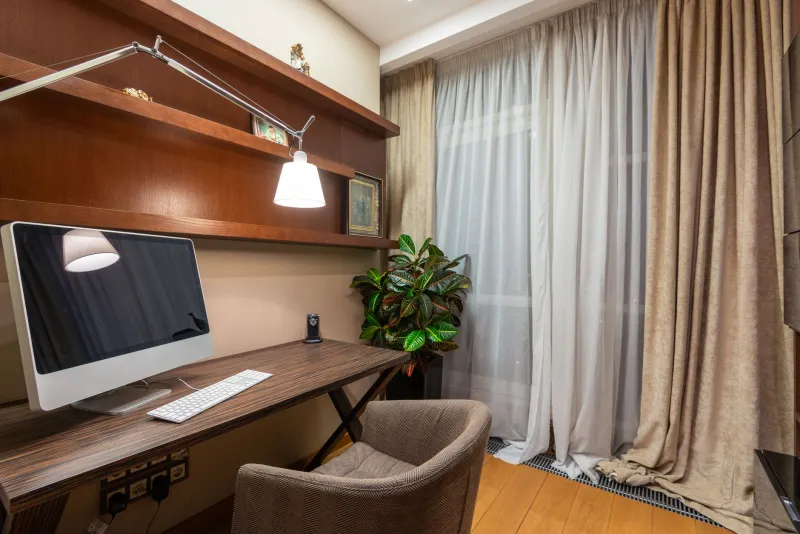
Bare glass is brilliant for light and terrible for echo. You do not need heavy drapes in a conservatory, and you may not want them. But a lightweight linen curtain, a Roman blind in a natural fabric, or even a simple café-style curtain across part of the glazing will take the edge off. If privacy is not an issue, consider dressing only the end wall or the side windows rather than every pane. The aim is to interrupt the reflections, not block the view.
If curtains feel too much, a fabric-covered valance or a soft pelmet can help, particularly where the conservatory roof meets the wall. It also hides the join, which is a nice bonus.
Cushions do more than look pretty
Cane seating usually comes with thin pads, or none at all. Adding seat cushions and a few back cushions is the most natural acoustic upgrade you can make. Look for covers you can wash, because conservatories get dusty and sunny in equal measure. Wool, cotton and linen are better absorbers than smooth synthetic covers. A mix of plain and patterned cushions also adds visual softness, which makes the room feel quieter even before you notice the sound.
Do not overstuff the chairs. Cane furniture looks best when its shape is still visible. A seat pad, two back cushions and perhaps a throw folded over one arm is plenty. If the chairs have loose joints or hard feet, add felt pads to stop little rattles and scrapes adding to the noise.
Use baskets, books and blankets as acoustic texture
Open shelving filled with books, baskets and boxes is a surprisingly effective sound diffuser. A small bookcase or a low shelf unit against a solid wall gives the room somewhere to put things and breaks up the flat surface behind it. Woven storage baskets echo the cane furniture and add another layer of texture. A blanket box with a soft lid, a pile of magazines, a tray of board games: all of these small, ordinary things help.
Wall hangings are worth considering too. A textile artwork, a woven wall panel or even a large framed print with a fabric mount can soften a bare wall. Avoid covering every wall. One or two pieces in the right place will do more than a gallery wall that makes the room feel cluttered.
Let plants play their part
Plants are not acoustic magic, but a few large, leafy specimens do help. Their leaves and stems scatter sound, and their compost and pots add mass. More importantly, they make a glass room feel less exposed. A monstera in a woven basket, a fern on a side table, a small olive tree in a corner: these are the kinds of plants that suit cane furniture and British light levels. Group them rather than dotting them about, and keep them away from radiators and draughty doors.
Rearrange before you buy
Before you spend anything, try moving the furniture. A chair pulled away from the glass will sound different from one pressed against it. A rug under the seating group will do more than a rug in the middle of the floor. A bookcase on the solid wall may soften the echo more than another cushion. Sometimes the room just needs a focal point that is not a hard surface.
The balanced room
The goal is not a padded box. It is a room where the rain on the roof sounds cosy rather than deafening, where conversation does not bounce, and where the cane furniture still feels light and airy. Start with one soft thing underfoot, one at the window, one on the seating and one on the wall. Live with it for a week. You will soon hear what the room needs next, and what it does not.