Quiet Pattern, Honest Cloth: Dressing Cane Furniture for British Light

Photo: cane conservatory sofa with gingham seat pads and linen cushions, British home interior, natural daylight, via cdn.shopify.com
Cane furniture has a way of looking finished before you have added a single cushion. The grid of the weave, the curve of a chair arm, the pale warmth of the frame: it is all structure and air. That is exactly why dressing it can go wrong. Add too many small prints, too many frills and too many competing colours, and the conservatory starts to feel like a fabric shop with a glass roof. Add too little, and the same room can feel like a waiting area.
The useful middle ground is not a secret. It is a set of quiet rules about scale, cloth and colour, applied with a bit of British practicality. The aim is not to decorate around the cane as though it were a problem. The aim is to let the cane remain visible while the textiles do the softer work: seat comfort, winter warmth, summer cool, and a bit of pattern that reads clearly from across the room.
Begin with the weave, not the wallpaper
Cane is an open pattern. It has rhythm and repetition, and it creates its own texture against a plain wall or a garden view. Textiles that fight that rhythm tend to be the ones with tiny, dense motifs: ditsy florals, tight trellis prints, small-scale paisley. From a distance they dissolve into a fuzzy noise, and up close they compete with the cane grid.
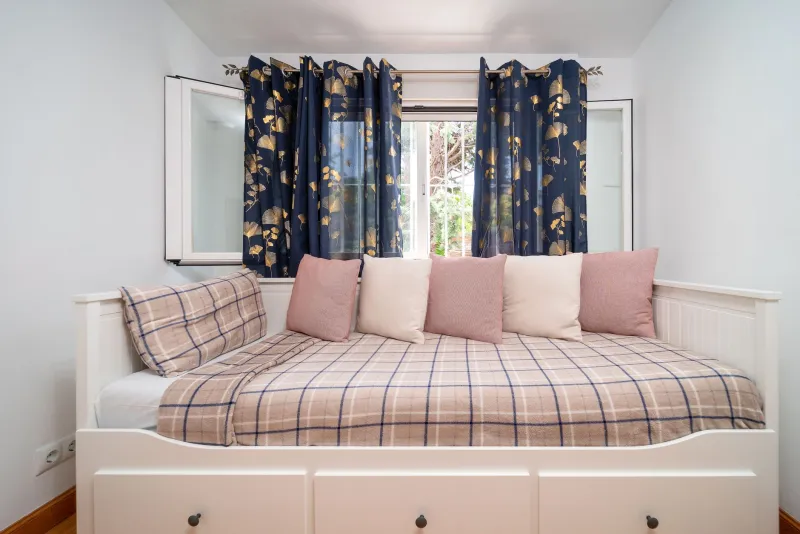
A better starting point is a pattern with a bit of breathing space. Gingham is the obvious British standby, but choose a check that is large enough to read: roughly two to three centimetres across, rather than a miniature picnic check. Ticking stripe works for the same reason. A stripe with visible width, perhaps one to two centimetres, gives the eye a rest between lines and sits comfortably beside the verticals and horizontals of cane. Both patterns are familiar without being fussy, and both look at home in a conservatory that is used for actual tea, actual newspapers and actual muddy boots.
Use the three-textile rule
A simple discipline for a cane conservatory is this: one pattern, two textures, three tones. It sounds restrictive, but it prevents the slow accumulation of cushions that happens in every home come October.
One pattern means exactly that. Choose gingham for the seat pads, or ticking for the scatter cushions, or a single embroidered motif on a throw. Do not introduce a second print just because it is on offer. Two textures give the room depth without visual noise: smooth linen next to a chunky Welsh wool, or a crisp cotton cover beside a soft bouclé seat pad. Three tones keep the palette grounded: perhaps natural oat, a mid green and a darker slate or navy. The cane itself counts as one of the tones, so resist the urge to match it exactly. A little contrast makes the frame look deliberate rather than camouflaged.
This is also the most reliable way to avoid chintz overload. Chintz is not the enemy; layers of glazed floral fabric, ruffles and matching wallpaper are. In a glass room, restraint reads as confidence.
Choose colour that survives British daylight
A south-facing conservatory can be brutally bright in May and flatly grey in February. Pale pastels often disappear in the first and turn slightly sad in the second. Mid-tones are more dependable: sage, denim, warm oatmeal, berry, mustard, slate. They hold their colour in both strong sun and low winter light, and they flatter cane rather than bleaching it out.
Pick the palette from things that are already fixed: the floor, the window frames, a favourite rug, the view into the garden. Then add one accent colour in the smallest textile, usually a cushion or a throw. If the room has a lot of green outside, a muted green gingham will feel calm; a mustard cushion will add a useful jolt without demanding a full redecoration. Keep the largest surfaces, such as a sofa cushion or a seat pad, in the quieter tone. Save the stronger colour for something you can move.
Match the cloth to the season and the seat
Linen is the natural summer choice. It creases, but that is part of its character, and it stays cool against the back of a chair. Cotton is easy to wash and works well for removable covers. Wool, especially a lightweight Welsh blanket or a lambswool throw, is what makes cane usable in a British winter without turning the conservatory into a cocoon. Avoid heavy chenille or thick velvet on seats that get direct sun; they can feel sticky and they block the airy quality that cane brings.
For seat pads, look for a breathable foam or a fibre fill that recovers its shape. A removable, washable cover is not a luxury in a conservatory. It is basic maintenance. Pre-wash any new covers before fitting them, especially darker colours, and keep a spare set folded away. In a room with garden doors and pets, you will be glad of it.
Make ties and pads work properly
A tie-on cushion that slides down the back of a cane chair is a small daily irritation. Look for two sets of ties, not one, and tie them around the frame rather than through the weave where they can pull. Seat pads need a non-slip base or a deep skirt that tucks around the seat edge. If the pad has ties, use them; they stop the pad migrating forward every time someone stands up. Measure the seat before buying, including the curve of the front edge, and allow for the cushion to compress slightly.
For loose covers, choose zipped closures over envelope backs if the cover will be washed often. Envelope backs are neat but they can gape on a padded seat. A simple zip, a washable cotton and a colour that hides a light tea spill will earn their keep.
A worked example for a typical British conservatory
Take a three-by-four-metre room with a rattan sofa, two cane armchairs and a slate floor. Start with natural linen loose covers on the sofa cushions. Add seat pads in a sage green gingham, medium check, with ties at the back. Put one oatmeal wool throw over the sofa arm and two ticking-stripe cushions in slate blue on the chairs. Leave the cane frames bare where they show. The result is patterned enough to feel dressed, textured enough to be comfortable and quiet enough that the garden still feels like part of the room.
Before you stop, do the squint test from the doorway. If the textiles blur into one busy mass, remove the smallest pattern. If the room feels thin, add texture rather than another print. Cane furniture is generous enough to carry a little cloth. It just needs the cloth to know when to stop.