Beds in the Glasshouse: A Calm Overnight Kit for the Cane Conservatory
Most British households do not have a spare bedroom. They have a box room with a filing cabinet in it, a landing that is technically a landing, and a conservatory that is lovely for nine months of the year and unused after dark. Turning that glass room into somewhere a friend can actually sleep is one of the cheapest upgrades going - provided you plan around the two things conservatories are famous for: temperature swings and condensation.
The trick is to approach it as a kit rather than a makeover. A bed, a screen, a box of bedding, a lamp, and somewhere to put a glass of water. Everything else is decoration.
Start With What You Already Own
If the conservatory already holds a cane sofa, you are halfway there, but check the frame before you promise anyone a mattress. A three-seater built for sitting is not built for sleeping, and the sofa beds sold in garden-furniture catalogues are rarely the ones designed for nightly use. Look for a proper pull-out mechanism on a hardwood frame rather than a fold-out panel on a softwood one.
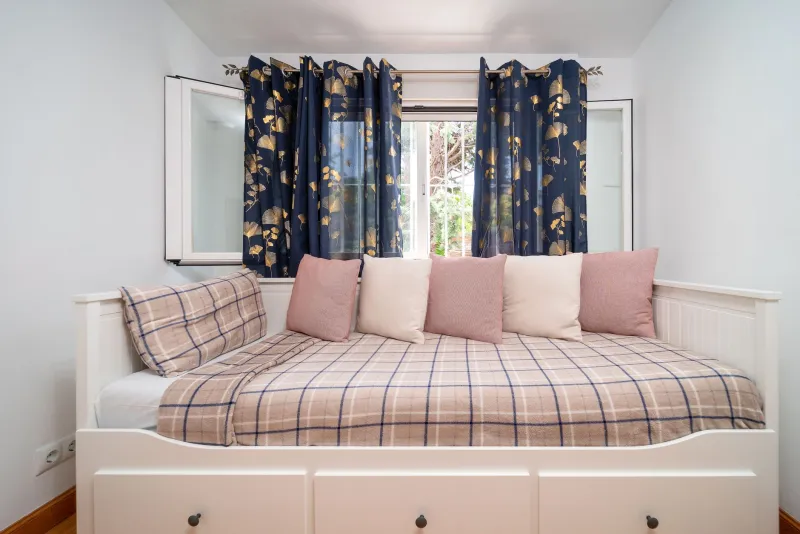
A cane daybed is the tidier answer. Ninety centimetres wide if the room is narrow, one hundred and twenty if you can spare it, because a guest who can stretch out is a guest who returns. The real advantage is that it looks like seating at four in the afternoon and like a bed at eleven at night, which matters enormously in a room you still want to use for reading, potting bulbs and drinking tea.
If you are going the sofa bed route, address the bar. The metal crossbar under the mattress is the thing your guest will remember at 3 a.m. A four-centimetre cotton or wool topper solves most of it and rolls away behind the frame in the morning.
The Mattress Nobody Talks About
Here is where cane and comfort have to negotiate. Cane does not enjoy being pressed against damp fabric for weeks on end, and foam is very good at holding moisture. Do not leave a memory-foam topper folded flat against the seat for a whole winter.
Store the topper and any spare mattress upright, in a breathable cotton bag, in the airing cupboard. Not sealed in plastic, which traps exactly the humidity you are trying to avoid. When guests arrive, air the topper for an hour before dressing the daybed, and take it off again within a day of them leaving.
Screens, Blinds and the Neighbours
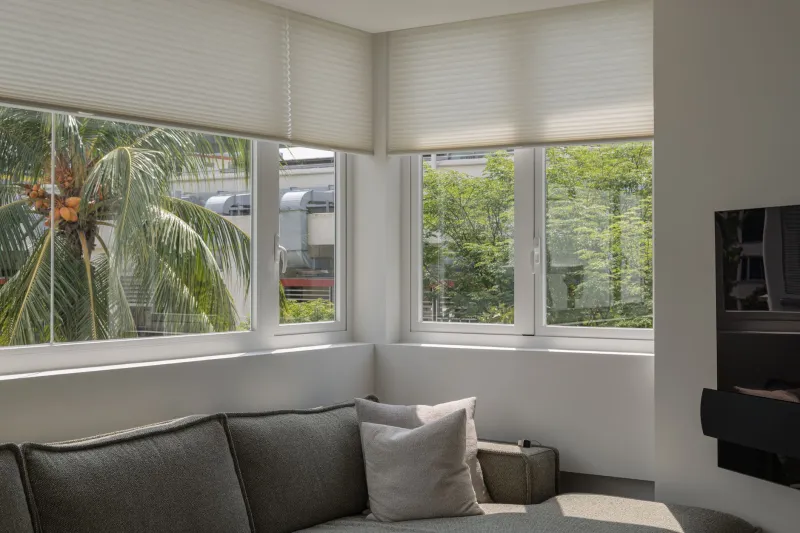
Conservatories are glass on three sides, which is glorious at six in the evening and awkward at eleven. A three-panel folding screen does two jobs at once: it blocks the sightline from next door's kitchen and it gives your guest somewhere to hang a dressing gown. A cane screen matches the furniture; a fabric-covered one softens the room. Either works.
On the windows, a light linen blind is usually kinder than a heavy thermal one. Conservatories need airflow overnight, and a sealed room with a sleeping person in it is a condensation factory by morning. Roman blinds on the east-facing side are worth more than curtains everywhere, simply because they stop the five o'clock summer sun waking everyone up.
Add a small mirror and a hook. Guests will not ask where either is, but they will be quietly grateful.
Bedding That Breathes, and Where It Lives by Day
Cotton and linen for most of the year, wool for the coldest months, and a 10.5 tog duvet that copes with both. Synthetic bedding feels warm for about an hour and then clammy, which is not what you want in a room with a glass roof.
For storage, a lidded ottoman at the foot of the daybed or a cane trunk that doubles as a side table. Use vacuum bags only for out-of-season spares - compressed bedding never quite recovers its loft, and the plastic holds moisture against whatever is inside it.
The working rule is simple: nothing soft stays against the cane overnight except the bedding actually in use. Take the decorative cushions off, stand the seat cushions on edge, and let the frame breathe.
Light for a Two in the Morning Glass of Water
Conservatories are famously short of sockets, so a rechargeable lamp is more useful than a beautiful one. Warm white, around 2700K, with a dim setting. Put it on a small tray table at bed height with a coaster, a phone charger and a spare socket adaptor.
If the route to the bathroom crosses the garden room and a hallway, a plug-in nightlight at ankle height is a small kindness. So is a torch in the bedside drawer, in a house where the landing light switch is in an unexpected place.
The Morning Routine That Saves the Cane
This takes twenty minutes and it is the part that keeps the furniture out of trouble.
- Open the windows and trickle vents for twenty minutes after your guest is up, even if it is raining.
- Strip the bed and fold the duvet back over a chair.
- Wipe any condensation off the inside of the glass with a microfibre cloth rather than letting it run down to the frames.
- Leave the daybed bare until the evening, so the cane can dry out properly.
- In a wet week, run a dehumidifier for an hour in the middle of the day.
If someone is staying for a fortnight in January rather than a weekend in June, be honest about the heating. A conservatory that drops to eight degrees overnight will make the cane contract, make the bedding damp and make your guest miserable. Keep the door to the house open, and consider a small oil-filled radiator on a timer rather than a fan heater pointed at the furniture.
A Short Kit List for the Guest Shelf
A rolled topper, two cotton pillows with protectors, a 10.5 tog duvet, a folded throw, a warm rechargeable lamp, a hot water bottle, a water glass, a small mirror, a hook for a dressing gown, and a short printed card with the wifi password, where the kettle lives and how to work the blind. Tape it inside the ottoman lid and it will never go missing.
The aim is not to make the conservatory look like a hotel. It is to make it work well enough that nobody minds, and to make packing it away on Sunday morning a pleasure rather than a chore.